

If you've been searching for answers about why you - or your child - struggle with focus, sleep, anxiety, or mood, a neurofeedback brain map might be the clarity you've been looking for. This technology captures your brain wave activity, turns it into a visual map, and uses those findings to guide precise, personalized neurofeedback training. Below, we'll walk through what brain mapping is, how it works, who it helps, what a session looks like, and how to get started.
Key Takeaways
A neurofeedback brain map (also called qEEG brain mapping) creates color-coded images of your brain waves that reveal patterns of brain dysregulation linked to symptoms like ADHD, anxiety, insomnia, and depression - but it is not a stand-alone diagnostic test for these conditions.
Brain mapping is a safe, non invasive procedure for assessing brain function, suitable for children and adults, with a typical recording taking about 40–60 minutes per person using a 19-sensor EEG cap.
Most people use a brain map to make neurofeedback therapy more targeted and efficient - and often more life changing - than symptom-based approaches alone.
Neurofeedback is a non-drug treatment for brain dysregulation that uses EEG to regulate brain activity, helping individuals learn self regulation over time.
The rest of this article explains each step of the process so you can determine whether brain mapping is the right first step for you or your family.
What Is Neurofeedback Brain Mapping?
Neurofeedback brain mapping - formally known as qEEG brain mapping, short for Quantitative Electroencephalogram - is the process of recording and analyzing electrical brain activity to create color-coded brain maps that guide neurofeedback training. It is also known as a Quantitative Electroencephalogram (QEEG).
Unlike MRI or CT scans that show brain structure, qEEG focuses entirely on brain function. It captures your brain waves - delta, theta, alpha, beta, and gamma - and measures how they behave at rest and sometimes during tasks. QEEG analyzes brainwave frequencies such as delta, theta, alpha, beta, and gamma waves to build a complete picture of your brain activity.
Here's what brain mapping technology actually shows you:
Where brain networks are overactive, underactive, or poorly synchronized
How your brainwave patterns compare to age-matched norms
Which brain areas may be contributing to challenges with concentration, mood, sleep, or learning
Computer software compares your brainwave patterns against a normative database, and the results are displayed as color-coded topographical brain maps. Different colors on the map represent areas of dysregulation in brain activity. QEEG brain mapping uses 19 electrodes to measure brainwaves across the entire cortex, and it identifies brain dysregulation effectively - giving clinicians the insight they need to build a targeted plan.
How qEEG Brain Mapping Works Step by Step
Understanding the process helps most people feel more comfortable before their appointment. Here's what happens from preparation to report.
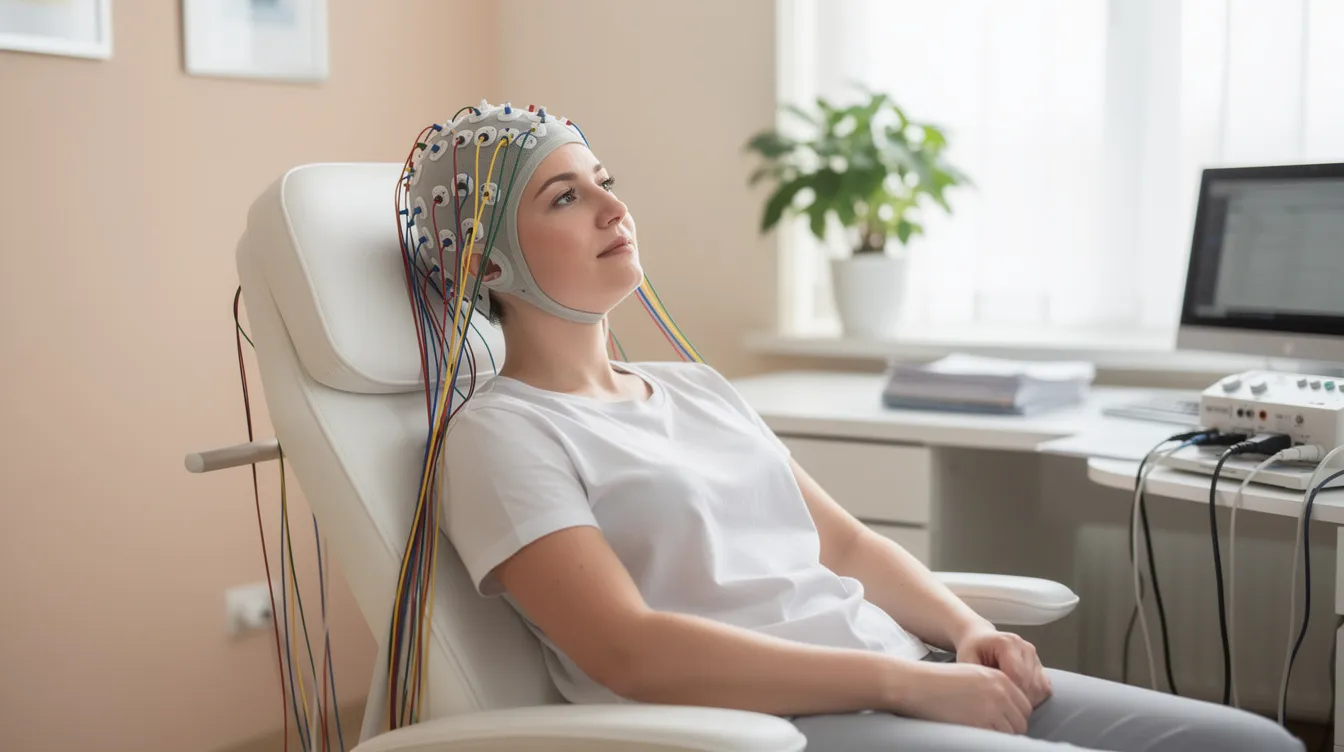
EEG setup: A snug cap with 19 sensors is placed on your head according to the international 10–20 system. Conductive gel ensures clean contact with the scalp. No electrical stimulation is delivered - sensors only record, making the process entirely non invasive.
Data collection: You'll sit quietly while brain activity is recorded during both eyes open and eyes closed resting states, usually about 10 minutes each. Sometimes simple tasks like reading or listening are included to observe how different brain areas respond under different conditions.
Data cleaning: Raw recordings pick up noise from eye blinks, jaw tension, and movement. Trained technicians and software remove these artifacts so the brain maps reflect genuine brain activity rather than muscle interference.
Quantitative analysis: The cleaned EEG data is transformed into frequency bands and compared to large, age-matched normative databases using Z-scores. A Z-score tells you how far a person's brain waves diverge from typical patterns - a score of +2 or −2 flags a meaningful deviation.
The output is a series of color-coded maps and statistical charts that a trained clinician interprets to inform neurofeedback therapy and treatment planning.
Brain Waves, Brain Maps, and What They Mean
Understanding the main brain wave bands helps make sense of what a brain map is actually showing. Think of your brain as a busy city - some neighborhoods are bustling with activity while others are quiet, and traffic needs to flow smoothly between them.
Brain Wave | Frequency | Everyday Example |
|---|---|---|
Delta | 0.5–4 Hz | Deep sleep |
Theta | 4–7 Hz | Daydreaming, inward focus |
Alpha | 8–12 Hz | Relaxed but alert, eyes closed rest |
Beta | 12–30 Hz | Problem-solving, active thinking |
Gamma | 30+ Hz | Fast processing, cognitive integration |
QEEG brain mapping looks at the amount and distribution of each band across the cortex, plus connectivity between regions. Brain mapping can reveal areas of the brain that are under-activated, and it can also identify spots that are running too hot. |
Here are concrete pattern–symptom examples:
Excessive frontal theta relative to beta often links with attention problems and distractibility - a pattern frequently seen in ADHD
Underactive posterior alpha may relate to visual processing or reading difficulties
Overactive high beta (above 20 Hz), especially in prefrontal or temporal regions, is associated with anxiety, hyperarousal, and insomnia
Poor coherence between frontal and parietal areas can signal inefficient neural communication
These are patterns of dysregulation, not fixed labels. The brain remains plastic and can often be trained toward healthier self regulation via neurofeedback - which is exactly where the brain map becomes a powerful tool.
From Brain Map to Neurofeedback Training Plan
This is where brain mapping translates directly into action. The process of neurofeedback includes baseline recording, training targets, and feedback sessions - and the brain map is what ties them all together. Brain maps help avoid a one-size-fits-all approach in treatment planning.
Therapists use the QEEG map to design personalized neurofeedback protocols. Based on your map findings, a clinician chooses which brain areas and which frequencies to up-train or down-train to improve focus, calm, sleep, or mood. Neurofeedback maps help identify specific treatment targets for cognitive training.
During neurofeedback training, you watch a movie or play a game that reacts to your brain activity in real time. When your brain produces more regulated brainwave patterns, the movie gets brighter or the game responds - rewarding healthier patterns with immediate positive feedback. This is EEG biofeedback in action, and it works through operant conditioning: the brain gradually strengthens new neural pathways each session.
Protocols are adjusted over time. Follow-up QEEG maps track progress and changes in brainwave patterns, and symptom tracking ensures the training stays aligned with your real-life goals. Brain mapping helps create targeted neurofeedback training protocols that evolve as your brain changes.
Conditions and Goals Helped by Brain Mapping–Guided Neurofeedback
QEEG brain mapping is not designed to provide clinical diagnoses - it doesn't "diagnose" ADHD or depression. But it reveals patterns of brain dysregulation commonly seen in these and other conditions. QEEG brain mapping identifies neuro-psychological causes of mental disorders, which gives clinicians a clearer picture than symptoms alone.
Neurofeedback is used for attention regulation, stress management, and cognitive enhancement, with research supporting benefits for addiction, anxiety, depression, ADHD, and high performance. Here's where it makes the biggest difference:
ADHD and learning challenges: Attention control, working memory, impulsivity, and reading performance. In a large multicenter trial of 114 ADHD patients, qEEG-informed neurofeedback achieved response rates of approximately 70% for meaningful symptom reduction, with about 55% reaching remission after an average of 32 sessions.
Anxiety, stress, and PTSD: Hyperarousal, rumination, startle responses, and emotional dysregulation. QEEG can assess brainwave patterns for conditions like ADHD and anxiety, helping clinicians understand exactly where the overactivation is occurring.
Depression and mood issues: Low motivation, brain fog, and difficulty experiencing pleasure. Brain maps often show underactivity in left prefrontal areas, providing a clear target for training.
Sleep problems and insomnia: Difficulty falling or staying asleep, waking unrefreshed. Brain mapping frequently highlights overactive high-frequency activity that keeps the body from settling.
Peak performance: Athletes, executives, and creatives use brain training to enhance focus, emotional balance, and resilience - even without a diagnosis.
Over 29 years, brain mapping has helped thousands improve their quality of life and achieve symptom relief across all of the above conditions. QEEG brain mapping can reveal neuro-psychological causes of disorders, which is especially valuable when other treatments have failed or produced side effects, helping explain why symptoms have been so persistent.
What a qEEG Brain Mapping Session Looks Like
If you're imagining something intimidating, take a breath. The procedure is safe, painless, and non invasive for children and adults alike. Brain mapping is a non-invasive procedure for assessing brain function - nothing goes into your brain.
Typical timeline:
Brief intake or review of your history (5–10 minutes)
Fitting the EEG cap and checking sensor contact (10–15 minutes)
Recording with eyes open and eyes closed (20–30 minutes)
Cap removal and clean-up (5 minutes)
The process of brain mapping takes about 40–60 minutes per person from start to finish.
Preparation tips: Arrive with clean, dry hair free of heavy styling products. Avoid excessive caffeine before the session. Take prescribed medication only as advised by your doctor.
During recording, you'll sit comfortably, relax with eyes open and then eyes closed, and stay as still as possible. Children may watch a calm video, and parents can often stay in the room. The actual analysis and report review usually happen at a follow-up consultation, where your clinician will explain the brain maps in plain language and discuss next steps.

Safety, Limitations, and Common Misconceptions
QEEG brain mapping and neurofeedback training are non invasive, drug-free, and generally regarded as safe when conducted by qualified practitioners. The sensors only record brain activity - they do not put electricity into your head. Research on side effects shows that most are transient and mild: temporary fatigue or a slight headache from sustained concentration.
Key clarifications:
A neurofeedback brain map is not a stand-alone diagnostic test for conditions like ADHD or anxiety. It must be interpreted alongside clinical interviews, behavior assessment, and other evaluations.
The quality of data depends on proper sensor placement, thorough artifact removal, and the size and quality of the normative database used for comparison.
Improvements are usually gradual over several weeks of training. Results vary by individual, and no responsible provider can guarantee a cure.
Recent meta-analyses note that while the effectiveness of neurofeedback is supported by growing research, more sham-controlled trials are needed to fully separate specific brain effects from non-specific factors.
Ask your provider about their training, how reports are generated, and how often progress is reviewed to ensure data-driven care.
Choosing a Brain Mapping and Neurofeedback Provider
Outcomes depend heavily on practitioner experience, technology quality, and how well protocols are personalized. Here's what to look for:
Credentials in qEEG, EEG biofeedback, and neurofeedback therapy from recognized boards
Experience with your specific concerns (ADHD in children, trauma in adults, insomnia, autism spectrum)
Up-to-date software and age-matched normative databases
Willingness to explain brain maps in understandable language and answer your questions
Clear treatment plans including number of sessions, review points, and how progress is tracked
Request example brain mapping reports (with identifying details removed) to see how detailed and actionable the findings are. Be wary of providers who promise guaranteed cures or rely solely on automated reports without clinical interpretation. Prepare a short list of your goals - better sleep, less anxiety, improved focus - before the consultation so you can align the brain training plan with real-life outcomes.
Real-World Stories: How Brain Mapping Can Be Life Changing
These anonymized examples illustrate what potentially happens when brain mapping guides the right neurofeedback approach.
The "lazy" student: A school-age child mislabeled as unmotivated had a brain map showing underactive frontal regions and elevated theta. Targeted neurofeedback improved focus, homework completion, and confidence within 25 sessions. Teachers noticed the change before the parents mentioned the training.
The anxious professional: An adult with long-standing anxiety and poor sleep had a brain map showing high beta overactivation. After 30 sessions of training, she reported feeling calmer, sleeping longer, and - in collaboration with her doctor - reducing her reliance on medication.
The concussion recovery: A professional struggling with fatigue and concentration after a head injury had mapping that revealed slowed processing in specific brain areas. Brain training supported a return to work and daily life over several months.
The older adult: A retiree noticing memory slips had a brain map showing inefficient alpha patterns and poor coherence. Neurofeedback improved mental clarity and everyday functioning, giving him a renewed sense of sharpness.
The common thread: each person learned to regulate their own brain activity through neurofeedback - they weren't "fixed" from the outside. Neurofeedback helps individuals self-regulate their brain activity, and neurofeedback training can improve attention and mood across every age group.
Getting Started with Brain Mapping and Neurofeedback
Taking the first step is simpler than you might think. Here's a practical action sequence:
Clarify your goals - reduce anxiety, improve sleep, support your child's learning, sharpen focus
Schedule a consultation to review your history and determine whether qEEG brain mapping is recommended
Attend your session following preparation guidelines (clean hair, medication plan agreed with your doctor)
Review your brain map and personalized training plan with your clinician
Commit to a realistic schedule - neurofeedback training can require 10–40 sessions for optimal results, typically 1–2 times per week, with adjustments based on age, goals, and response
Keep a simple symptom and sleep journal during training. Subtle improvements in mood, focus, behavior, and sleep quality often occur before dramatic shifts - and tracking helps you and your clinician measure progress in one spot.
Neurofeedback uses EEG to regulate brain activity, and brain mapping is the compass that points the training in the right direction. You don't have to keep guessing about what's happening inside your brain. A neurofeedback brain map can give you real data, real insight, and a real path toward lasting results and long-term well being.
FAQ
Is brain mapping painful or risky?
QEEG brain mapping is painless and non invasive. Sensors rest on the scalp and only record brain waves - similar to how a heart ECG records electrical activity from the skin surface. The most common minor discomforts are wearing the snug cap and having gel in your hair, which washes out easily afterward. Serious risks are extremely rare when standard safety protocols and properly maintained equipment are used.
How old do you have to be for accurate qEEG brain mapping?
Many normative databases start around age 5 or 6, so brain mapping is most reliable from early school age upward. Younger children can sometimes be mapped using specialist approaches, but interpretation requires extra caution. Ask providers what age ranges their normative data support and how many young children they have successfully worked with.
Can a brain map tell me which medication I should take?
Brain maps do not replace medical evaluation and cannot prescribe or choose medications. However, qEEG findings may help a prescribing clinician understand patterns of over- or under-activation, sometimes informing broader treatment decisions when combined with clinical judgement. Any medication changes should always be made in consultation with your prescribing doctor.
How long do neurofeedback results from brain training last?
Many people experience lasting results because neurofeedback supports learning and neuroplasticity - not just temporary effects while training. Duration of benefit depends on the number of sessions completed, lifestyle habits like sleep and exercise, and whether underlying medical issues are also addressed. Some individuals choose occasional booster sessions during stressful periods to reinforce self regulation skills.
Will a brain map show if I have a serious disease like dementia or epilepsy?
Standard neurofeedback-oriented qEEG brain mapping is not a replacement for full neurological workups, MRI, or clinical EEG for conditions like epilepsy or suspected dementia. Certain abnormal patterns may prompt referral to a neurologist for further evaluation, but the brain map itself is not a formal medical diagnosis. If you experience sudden or severe symptoms like seizures or rapid cognitive decline, seek urgent medical attention rather than relying on neurofeedback assessment alone.